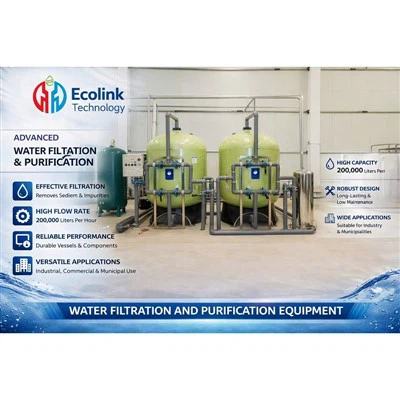
As a supplier of purified water treatment equipment, I often encounter various water quality challenges from our clients. One such issue that has been gaining more attention lately is water with high cobalt content. Cobalt is a transition metal that can find its way into water sources through industrial discharges, mining activities, and even natural weathering of cobalt – containing rocks. High levels of cobalt in water can pose risks to human health and the environment, so it’s crucial to handle it effectively. In this blog, I’ll share how our purified water treatment equipment tackles water with high cobalt content. Purified Water Treatment Equipment
Understanding the Problem of High – Cobalt Water
Before delving into the treatment methods, it’s important to understand the nature of the problem. Cobalt is a trace element that is essential in small amounts for human health, as it is a component of vitamin B12. However, excessive intake of cobalt can lead to various health problems, including heart and thyroid issues, vision problems, and skin rashes.
In water sources, cobalt can exist in different forms, such as cobalt ions (Co²⁺ and Co³⁺) and complexed with other substances. The concentration of cobalt in water can vary widely, from a few micrograms per liter in natural water to much higher levels in industrial wastewater. The presence of other substances in the water, such as organic matter, pH, and the concentration of other ions, can also affect the behavior and treatment of cobalt.
Our Treatment Approaches
1. Chemical Precipitation
Chemical precipitation is one of the most common methods for removing cobalt from water. Our equipment is designed to add specific chemicals to the water to form insoluble cobalt compounds, which can then be separated from the water through sedimentation or filtration.
Typically, we use hydroxide – based precipitants, such as sodium hydroxide (NaOH) or calcium hydroxide (Ca(OH)₂). When these chemicals are added to the water, they react with cobalt ions to form cobalt hydroxide (Co(OH)₂ or Co(OH)₃) precipitates. The reaction can be represented by the following equations:
For Co²⁺:
Co²⁺ + 2OH⁻ → Co(OH)₂↓
For Co³⁺:
Co³⁺ + 3OH⁻ → Co(OH)₃↓
The efficiency of chemical precipitation depends on several factors, including the pH of the water, the dosage of the precipitant, and the presence of other ions. Our equipment is equipped with pH sensors and dosing systems to ensure that the optimal pH is maintained for cobalt precipitation. Generally, a pH in the range of 9 – 11 is suitable for cobalt hydroxide precipitation.
After the precipitation process, the water is allowed to settle in a sedimentation tank. The cobalt hydroxide precipitates settle at the bottom of the tank, and the clarified water can be further treated or discharged. The sludge containing cobalt hydroxide can be removed from the tank and disposed of properly.
2. Ion Exchange
Ion exchange is another effective method for removing cobalt from water. Our ion – exchange resins are designed to selectively exchange cobalt ions with other ions, such as sodium or hydrogen ions.
The ion – exchange process works based on the principle of reversible chemical reactions. When water containing cobalt ions passes through the ion – exchange resin, the cobalt ions are attracted to the resin and replace the ions that are initially bound to the resin. For example, in a cation – exchange resin, the reaction can be represented as:
2R – Na + Co²⁺ → R₂ – Co+ 2Na⁺
where R represents the resin matrix.
Our ion – exchange equipment is designed to operate in a continuous or batch mode, depending on the flow rate and the cobalt concentration of the water. The resin needs to be regenerated periodically to restore its ion – exchange capacity. This is usually done by passing a concentrated solution of the regenerating ions (e.g., sodium chloride solution for sodium – form resins) through the resin bed.
One of the advantages of ion exchange is its high selectivity for cobalt ions, especially in the presence of other ions. It can also achieve very low residual cobalt concentrations in the treated water.
3. Adsorption
Adsorption is a process in which cobalt ions are adsorbed onto the surface of a solid adsorbent. Our equipment uses various adsorbents, such as activated carbon, zeolites, and metal oxides, to remove cobalt from water.
Activated carbon has a large surface area and can adsorb cobalt ions through physical adsorption. The adsorption capacity of activated carbon depends on factors such as the surface area, pore size distribution, and the chemical properties of the carbon. Zeolites are crystalline aluminosilicates with a porous structure that can selectively adsorb cobalt ions based on their size and charge. Metal oxides, such as iron oxide and manganese oxide, can also adsorb cobalt ions through chemical reactions on their surfaces.
The adsorption process can be carried out in a fixed – bed reactor, where the water flows through a column filled with the adsorbent. The adsorbent needs to be replaced or regenerated when its adsorption capacity is exhausted. Our equipment is designed to monitor the breakthrough of cobalt in the treated water and trigger the replacement or regeneration process in a timely manner.
4. Membrane Filtration
Membrane filtration is a physical separation process that can be used to remove cobalt from water. Our membrane filtration equipment includes microfiltration (MF), ultrafiltration (UF), nanofiltration (NF), and reverse osmosis (RO) membranes.
Microfiltration and ultrafiltration membranes can remove suspended solids, colloids, and some large – molecular – weight organic matter from the water, but they are not very effective in removing dissolved cobalt ions. Nanofiltration membranes have a smaller pore size and can reject some divalent ions, including cobalt ions. Reverse osmosis membranes have the smallest pore size and can achieve very high rejection rates for cobalt ions and other dissolved substances.
The choice of membrane depends on the water quality requirements and the concentration of cobalt in the water. For example, if the cobalt concentration is relatively low and the water also contains other contaminants, nanofiltration may be a suitable option. If very low cobalt concentrations are required, reverse osmosis is usually the preferred method.
Monitoring and Optimization
In addition to the treatment processes, our purified water treatment equipment is equipped with monitoring systems to ensure the effectiveness of cobalt removal. We use online sensors to measure the cobalt concentration in the water before and after treatment, as well as other parameters such as pH, conductivity, and turbidity.
Based on the monitoring results, our equipment can automatically adjust the treatment parameters, such as the dosage of chemicals, the flow rate, and the regeneration frequency of the ion – exchange resin or adsorbent. This ensures that the treated water meets the required water quality standards.
Conclusion

Handling water with high cobalt content requires a comprehensive approach that combines different treatment methods. Our purified water treatment equipment is designed to provide effective and reliable solutions for cobalt removal. Whether it’s through chemical precipitation, ion exchange, adsorption, or membrane filtration, we can customize the treatment process according to the specific water quality and requirements of our clients.
Anionic Polyacrylamide If you are facing the problem of high – cobalt water and are in need of a reliable purified water treatment solution, we would be more than happy to discuss your needs. Our team of experts can provide you with detailed information about our equipment, conduct water quality analysis, and offer customized treatment plans. Contact us to start a procurement discussion and take the first step towards clean and safe water.
References
- "Water Treatment Unit Processes: Physical and Chemical" by David W. Hendricks.
- "Ion Exchange for Water Treatment" by C. N. Suri.
- "Adsorption Technology and Design" by Perry’s Chemical Engineers’ Handbook.
- "Membrane Technology and Applications" by Richard W. Baker.
Shandong Ecolink Technology Co., Ltd.
Shandong Ecolink Technology Co., Ltd. is one of the most reliable purified water treatment equipment manufacturers and suppliers in China. We warmly welcome you to wholesale bulk high quality purified water treatment equipment from our factory. If you have any enquiry about cooperation, please feel free to email us.
Address: No. 8, Xiaying Chemical Industry Park, Aobu Road, Xiaying Town, Changyi City, Weifang City, Shandong Province,China
E-mail: sale02@ecolink-environment.com
WebSite: https://www.ecolink-environment.com/
