Hey everyone, if you’ve been hanging around the power space lately, you’ve probably heard the term “Grid Power Enclosures (GPEs)” thrown around a lot—especially as more people need reliable, scalable power for everything from data centers to remote construction sites. But I get it, one question that pops up all the time is: “What’s the maximum power these enclosures can even handle?” As a supplier who’s been building these bad boys for over a decade, I’m here to break this down like we’re chatting over coffee, no jargon, no fancy fluff. Let’s dive in. Grid Power Enclosures
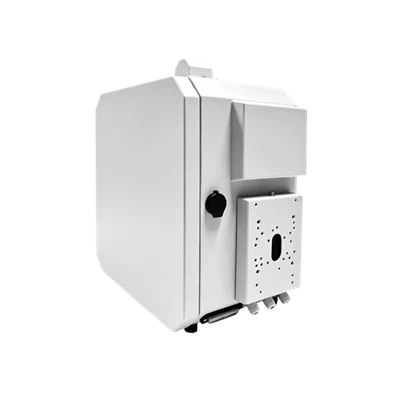
First off, let’s make sure we’re on the same page about what a GPE actually is, because a lot of folks mix them up with basic power boxes. A Grid Power Enclosure is basically a self-contained, weatherproof, pre-wired unit that ties into the main grid, designed to deliver consistent power without the hassle of on-site construction. Think of it as a plug-and-play power hub that you can drop anywhere—urban, rural, disaster zones, you name it. The big thing about these is they’re modular, right? So you start small, add more units as you go, and that flexibility is why they’re blowing up for small businesses and big corporations alike.
Now, the maximum power question is tricky because it’s not a one-size-fits-all number. Back when we first started, most GPEs topped out around 2 MVA (that’s megavolt-amperes, for the non-enerdy folks) but tech has moved fast. Wait, let’s clarify MVA vs megawatts (MW) real quick—most of you care about MW, because that’s actual power that does work (like running machines, servers, AC). The ratio there is roughly 0.8 MW per 1 MVA, so a 5 MVA GPE is around 4 MW of usable power. Got it? Good, let’s get back to max capacity.
These days, off-the-shelf GPEs from most suppliers max out at around 10 MVA, or ~8 MW. But hold up—if you’re a big player like a data center or a mining operation that needs way more, you don’t have to buy one giant unit. We design our GPEs to work in parallel, so you can stack them. Like, five 10 MVA enclosures wired together? That’s 50 MVA, or 40 MW. I’ve actually worked with a solar farm client in Arizona that needed 70 MW for their inverter array, so they ran seven of our 10 MVA units synced up with grid-tie software. It ran like a charm—no hiccups, no power drops, just consistent flow.
Wait, but why can’t we just make a single giant enclosure that’s 100 MVA? Let’s talk about the real limits here, not just what’s technically possible, but what’s practical for grid compatibility. First, size and weight. A 10 MVA GPE is already a big beast—roughly 40 feet long, 10 feet wide, 12 feet tall, and that’s just the unit. A 50 MVA unit would be like two semi-trucks stuck together, and moving that through a city or remote area? Nightmare. Permits, road width, weight limits—you have to close down highways sometimes, which costs time and money. Modular is way easier here; you ship each unit on a flatbed, drop them, and hook them up on-site in a day or two.
Then there’s grid stability. The grid is a finicky thing—if you dump a massive amount of power into it at once without proper sync, you can cause surges, outages for whole neighborhoods, even damage to other equipment. Our GPEs have built-in sync controllers that make sure every unit’s frequency and voltage match the grid exactly before connecting. For a single 10 MVA unit, that’s manageable, but a 100 MVA single unit would need way more complex sync gear, which gets expensive and risky. There’s also redundancy—if one unit goes down in a parallel stack, the others kick in automatically, so you don’t lose power. A single giant unit would mean if something breaks, you’re dead in the water until it’s fixed.
Other factors that tie into max capacity: location and environment. If you’re putting a GPE in a desert where it’s 120 degrees Fahrenheit all summer, the cooling system has to work harder, so that cuts down on how much usable power you can pull. We design our units for extreme temps, but even so, a desert unit might hit 9.5 MVA instead of 10 MVA in peak heat. If you’re putting it in a cold area, cooling is less of an issue, so you can hit the full 10 MVA. Also, utility rules—some local grids have limits on how much power a single customer can draw at once, so even if your GPE can do 10 MVA, your utility might only let you hook up 8 MVA until you upgrade your grid tap.
Let me share a real example from a recent client to make this concrete. A construction company in Texas was building a new subdivision that needed 12 MW of temporary power for their excavators, concrete mixers, and site offices. They first asked if we had a single 12 MW GPE, but when we checked local utility rules, their grid tap could only handle 10 MW total. So we sent them two of our 5 MVA units (~4 MW each) plus a small backup generator, wired them together. The utility approved that, it fit within their site’s space limit, and they had enough power to run the whole site without issues. When the subdivision was done, they disconnected the units and moved them to another job—perfect flexibility.
Another thing a lot of people don’t think about: future upgrades. If you’re a small business that’s starting with 2 MW, you don’t want to have to replace your entire GPE in two years when you grow to 6 MW. That’s why modular GPEs are such a game-changer. Our units have quick connect ports, so adding a new unit is just a day’s work, no major rewiring or construction. A client of ours that runs a small warehouse started with a 2 MVA GPE (1.6 MW) five years ago, and now they’ve added four more units to hit 10 MVA (8 MW) for their new 3PL wing. No hassle, no wasted money on old equipment.
Wait, what about the edge cases? Like off-grid applications? If you’re running a remote research station or a mobile military base, GPEs work with solar panels and batteries too. The max there is a bit different, because you’re not tied to the grid, but same modular rule applies. I’ve shipped GPEs for remote mining sites in Canada’s north that were hooked up to wind turbines and generators, hitting 15 MW total with three of our 5 MVA units. It’s all about matching the number of units to your power needs, not a single max number.
A common myth I hear: “Bigger is always better.” Not when it comes to GPEs, anyway. Unless you have a permanent, fixed location with huge grid access and plenty of space, going over 10 MVA per unit isn’t practical. The sweet spot for most commercial and industrial uses is between 2 MVA and 10 MVA per enclosure, with parallel stacking for higher needs. We see a lot of clients overbuy at first, then realize they’re wasting space and money on a unit bigger than they need, when modular would be cheaper.
Now, let’s talk about what we as a supplier do to make sure these capacities are safe and reliable. Every GPE we build goes through rigorous testing—we run them at 110% of their rated capacity for 72 hours straight to make sure no overheating, no electrical issues. We work with independent third-party labs to certify that they meet grid standards in North America, Europe, and Australia, so you don’t have to worry about it not passing inspections. We also have a 24/7 support team that can troubleshoot any issues, even if you’re in the middle of the desert or the middle of the night.
So to wrap this up, the short answer to “what’s the max power GPEs can support”: most off-the-shelf units top out at 10 MVA (~8 MW), but you can stack multiple units for way higher capacities—we’ve supported clients with up to 70 MW using our parallel system. But the actual max that makes sense for your use depends on grid rules, space, environment, and how much you want to scale.
If you’re curious about what would work for your project—whether it’s a new data center, a construction site, a solar farm, whatever—hit us up for a chat. We don’t do pushy sales stuff; we just help you figure out exactly what size GPEs you need, no overpaying for more than you need. Just reach out and we can break down options, answer any other questions, and get you set up with reliable power that fits your needs.

Oh, and one last thing—don’t forget to factor in future growth. It’s way easier to add a unit down the line than to move and replace a giant one. That’s the whole point of GPEs, right? Flexibility and reliability when you need it.
UPS Power Enclosures References
- International Electrotechnical Commission (IEC) 61439, Low-voltage switchgear and controlgear assemblies
- Department of Energy (DOE), Grid Modernization Initiative: Microgrid and Distributed Energy Resource Standards
- National Electrical Manufacturers Association (NEMA) Standards for Power Enclosures, Type 3R and Type 4X
- Solar Energy Industries Association (SEIA), Utility-Scale Solar Power System Design Guidelines for Grid Integration
Shenzhen Gago Electronics Co., Ltd.
Shenzhen Gago Electronics Co., Ltd. is one of the most professional grid power enclosures manufacturers and suppliers in China. As we have world-leading production equipment and strong manufacturing capabilities, we warmly welcome you to buy high quality grid power enclosures at competitive price from our factory.
Address: C201,Building B, No.170 Xingfa Road,Shangcun Community, Gongming Street, Guangming District, Shenzhen, China
E-mail: info@gagoelectronics.com
WebSite: https://www.gagodeterrence.com/
