Hey everyone, it’s Jake here from your go-to milling tool supplier – quick heads up, this isn’t that stuffy, jargon-heavy white paper you’re used to sifting through. Today we’re talking about something that’s been bugging so many of you lately: coolant for milling tools. I hear it all the time – “my end mills won’t last a week on stainless” or “I’m getting weird burrs I never had before” – and 9 times out of 10, it’s not the tool. It’s the coolant. I’ve watched this play out with hundreds of workshops over the years, and the mix between tool type, workpiece material, and coolant isn’t rocket science – but it’s easy to mess up when you’re juggling 10 jobs at once. Milling Tool
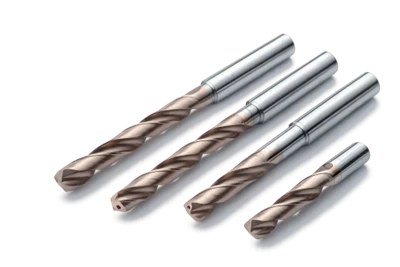
Let’s start with the basics to cut through the noise. Milling tools aren’t one-size-fits-all, right? You’ve got your high-speed end mills for aluminum, your tough face mills for steel, those tiny micro-tools for medical parts, and maybe even your indexable insert mills for heavy-duty work. Each of these has totally different needs when it comes to heat, friction, and chip evacuation. Coolant isn’t just “stuff you squirt to cool things down” – it’s a multi-tasker: it lubricates the cutting edge so there’s less friction, carries away all that heat generated when the tool is spinning and cutting at 10k RPM, flushes chips out of the cut so they don’t gouge the workpiece or re-cut, and even prevents built-up edge (that gross gunk that sticks to tools and ruins finishes). Mess any of those up, and you’re looking at broken tools, scrap parts, and wasted time – none of us have time for that.
First up, let’s talk about the most common milling tool: solid carbide end mills. These workhorses are used for everything from aluminum parts to hardened steel, so their coolant needs change a lot based on what material they’re cutting. If you’re running high-speed end mills for soft aluminum, say a 2-flute ball end mill for a 3D printed aerospace bracket, you can get away with a good synthetic coolant – but wait, not just any synthetic. You need one with a high surface tension so it breaks into tiny droplets that can get into those tight flutes of the end mill. Aluminum chips are super hot, and they weld to carbide edges like crazy if there’s not enough lubricity. I’ve seen guys use straight water for aluminum milling, and by the end of a shift their end mills look like they’ve been sandblasted. For stainless steel or titanium solid end mills, though, you need a semi-synthetic (also called soluble oil) coolant with extreme pressure (EP) additives. Those additives form a protective layer on the cutting edge under high heat, so they don’t wear out fast. Last month, a customer from Detroit was using generic synthetic for his 6-flute end mills cutting 17-4 PH stainless, and he was going through a new end mill every 12 parts. Switched him to our recommended semi-synthetic with sulfur-based EP, and he’s getting 45 parts per tool now – that’s a 275% jump. Game changer, right?
Wait, quick side note on solid carbide micro end mills – those tiny ones for electronic connectors or medical stents? You can’t be dumping flood coolant on those, it’ll blow the chips everywhere and they’re too small for full flow. What you need here is minimum quantity lubrication (MQL), or even a quality cutting oil applied with a micro-doser. Flood coolant is just too aggressive for tiny tools – it can cause thermal shock if the cutting edge is super hot and then gets cold coolant hit it all at once, which leads to micro-cracks. One of our medical clients was snapping 0.1mm end mills every time he tried to mill titanium bone plates, and switching to MQL with a light ester-based oil fixed that instantly. No more thermal shock, chips are carried away in a fine mist, and he’s going through 1/10th the tools. That’s the kind of win that makes all the difference when you’re making parts that cost hundreds each just to make.
Next, face mills and indexable insert mills – these are the heavy hitters, used for roughing steel or cast iron, hogging off material fast. Their coolant needs are totally different because they’re dealing with way more chip load and heat, but they don’t have those tight flutes that need small droplets. For cast iron face mills, a lot of people think they need straight synthetic or even water-based coolant, but wait – cast iron produces a lot of fine, dusty chips, and straight water can cause rust on your machine and toolholders. I recommend a semi-synthetic with rust inhibitors, and running it through a high-volume flood system. The high volume flushes all those tiny cast iron chips away before they get ground back into the cut. For carbon steel or alloy steel indexable mills, especially when you’re doing heavy roughing, a semi-synthetic with high-chlorine EP additives is perfect. Wait, chlorine sometimes gets a bad rap, but it works way better than sulfur for heavy roughing on steel, because it creates a thicker lubricating layer at super high temps. I had a fabrication shop in Ohio that was using dry machining for their roughing operations just because they thought coolant would gum up the inserts – tried our recommended semi-synthetic with chlorine EP, and now their insert life is up 30% and their machines run 20 degrees cooler. No more smoke coming off the spindle, that’s a win for everyone.
What about tools for exotic materials? Like Inconel for jet engines, or Hastelloy for chemical processing parts? These are the worst, they work-harden so fast and generate insane heat. For solid carbide end mills cutting Inconel, you need a synthetic ester coolant with both sulfur and phosphorus EP additives – don’t skimp on that dual additive. Those two together handle the extreme high pressure and high heat way better than single additives. A customer from Houston was cutting Inconel 718 for turbine blades, and he was using a generic oil that caused the tool to wear in just 2 minutes. Switched to our recommended ester-based coolant, and his tool life went from 2 minutes to 18 minutes – that’s huge when each part takes an hour to mill. And for indexable mills cutting these super alloys, a neat cutting oil (straight oil, no water mix) is often better. The oil’s high viscosity clings to the cutting edge longer, even at the high temps, and provides way more lubrication than water-based coolants. I know some guys swear by cryogenic cooling for exotic materials, but that’s way too expensive for most small to medium workshops – neat oil is a no-brainer alternative.
Wait, let’s talk about what to avoid, because I’ve seen so many people make these mistakes. First, don’t mix coolant types. If you’ve been using semi-synthetic and decide to switch to synthetic, you have to flush the whole system first. Mixing them causes bacteria growth, and the coolant turns sludgy, which clogs your lines and ruins tools. Second, don’t use coolant that’s too old. Bacteria builds up, and it loses its lubricity and EP additives. I recommend testing your coolant every 2 weeks – pH level, concentration, bacteria count – it takes 10 minutes and saves you from a ton of headaches. Third, don’t just use flood coolant for every job. MQL is perfect for high-speed operations or small tools, and it uses way less coolant, so it’s better for the environment too.
Now, let’s tie this all back to what works for our customers – because at the end of the day, I don’t sell coolants, I sell milling tools, but I know that pairing the right coolant with the right tool is what makes a shop run smoothly. For example, if you’re using our high-performance solid carbide end mills for aluminum, our go-to recommendation is a semi-synthetic coolant with good surface tension to get into those flutes, no need for anything fancy. If you’re running our indexable face mills for heavy steel roughing, pair them with our recommended chlorine-based EP semi-synthetic, and you’ll see insert life jump instantly. If you’re working with tiny micro-tools, skip flood coolant and use MQL with a light ester oil – trust me, you won’t regret it.
I’ve heard all the excuses: “coolant is too expensive”, “I don’t have time to test it”, “I’ve always done it this way”. Let me tell you, I’ve been in this game for 15 years, and the shops that do their coolant right are the ones that stay in business. They have less scrap, less downtime, longer tool life, and their guys aren’t complaining about broken tools every other hour. This isn’t rocket science – it’s matching the coolant to your tool type and your workpiece material, and keeping your coolant fresh.
If you’re struggling with tool life, scrap parts, or just want to get more out of your milling tools, hit me up. I don’t push random products, I give real recommendations based on what works for hundreds of workshops just like yours. I can tell you exactly what coolant to pair with whatever milling tool you’re using – solid carbide end mills, face mills, micro-tools, indexable inserts, whatever. Shoot me a message, let’s figure this out together, no fancy sales talk, just real advice from someone who’s been there, fixed that, and knows what works.
Milling Tool References:
- ASM International, “Machining of Milling Tools: Coolant Selection and Performance Optimization”, 2021
- Modern Machine Shop, “Minimum Quantity Lubrication for Micro Milling Applications”, 2022
- Kennametal Inc., “Guide to Coolant Selection for Indexable Milling Tools”, 2020
- Manufacturing Engineering Society International, “Effect of Extreme Pressure Additives on Milling Tool Life”, 2019
Shun Wei Precision Technology Co., Ltd.
With abundant experience, we are one of the most reliable milling tool manufacturers and suppliers in China. We warmly welcome you to buy durable milling tool at competitive price from our factory. If you have any enquiry about cooperation, please feel free to email us.
Address: Room901, Building2, Yijing Apartment, Northeast side of the intersection of Central Avenue and East Fifth Road, Tianjin Free Trade Zone (Airport Economic Zone)
E-mail: sale@sw-csd.com
WebSite: https://www.tjswprecisiontool.com/
