Hey there, let’s cut to the chase—if you’ve stared at a dead lithium-ion motorcycle battery, grabbed your car charger to plug it in, and then panicked thinking, “Wait, can I even do this without frying my ride?” you’re not alone. I run a car battery charger supply business, so I get this question all the time—it’s one of the most common ones our team fields weekly, and honestly, it makes total sense. A lot of riders stash a car charger for emergencies, but lithium-ion (Li-ion) batteries aren’t the same as the old lead-acid ones most car chargers are built for. Let’s break this down like we chat over a coffee, no boring tech jargon, just real stuff I’ve seen with customers and our products. Car Battery Charger
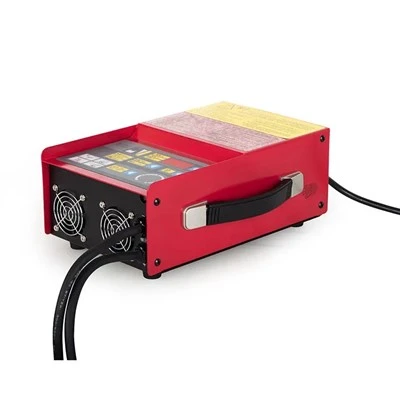
First, let’s level set on the two main battery types here because that’s where all the confusion starts. Back in the day, almost every motorcycle ran a lead-acid battery—they’re cheap, heavy, and they love getting a slow, steady charge. But lately? So many riders are ditching lead-acid for Li-ion because they’re 1/10th the weight, hold a charge way longer when the bike’s sitting, and crank better in cold weather. The tradeoff? They’re way more finicky about charging rules. Now, car chargers—our car chargers, too—are designed for those big, bulky lead-acid car batteries, which use a totally different chemistry. Lead-acid needs a charge that goes through two main stages: bulk charging (pump as much power as fast as possible until it hits a set voltage) and absorption (slow down to top it off without overloading). A lot of cheap car chargers even have a third stage, float charging, to keep the battery topped up when it’s not in use.
Li-ion batteries? Their charging dance is way different. Lithium doesn’t like being pumped full of power as fast as lead-acid. If you shove too much current at a Li-ion too quickly, you risk overheating, which can damage the battery cells, cut its lifespan way short, or even be a safety issue (we’re talking swelling or fire, though that’s rare if you’re careful). Also, Li-ion has a specific voltage window it needs to stay in—most motorcycle Li-ion batteries need to be charged to a max of around 14.6 volts, while a lot of standard car chargers push 14.8 or even 15 volts for lead-acid. That tiny difference might seem trivial, but over time, it’s like leaving a soda can in a hot car—gradual damage that adds up.
But here’s the thing: it’s not a straight “yes” or “no.” A lot of riders ask, “Wait, can I ever use a car charger on a Li-ion motorcycle battery?” The answer is sometimes, but only if you use the right car charger, and you follow super specific rules. Let’s talk about the types of car chargers that work, because not all car chargers are equal. If you’ve got a cheap, no-frills car charger that only has an on/off switch, stay far away. That’s a no-go—no logic to adjust for battery type, so it’ll likely overcharge your Li-ion. But if you’ve got a modern, smart charger (the kind most of our inventory is, actually—we build smart chargers with auto-detect for different battery chemistries), then you might be good… but only if the auto-detect setting has a dedicated “lithium-ion” or “LiFePO4” mode (wait, side note: a lot of motorcycle Li-ion batteries are LiFePO4, which is a type of lithium iron phosphate, not the old cobalt ones—smart chargers often list that too, so double-check).
I had a customer last month, a guy named Jake who fixes vintage motorcycle restorations, bring this up. He had a 2019 BMW with a Li-ion battery, and his go-to car charger was our mid-range smart model. He accidentally used the lead-acid mode instead of lithium, and thought he’d wrecked his battery—turns out, it was just partially charged, and once he switched to the right mode, it worked fine. But he told me, “I never would’ve guessed mode selection mattered for a charger that looks the same.” That’s the big mistake riders make—they assume all chargers just “charge,” but the smart ones are built to talk to different battery types.
Now, what are the hard rules to follow if you do decide to use a car charger on your motorcycle Li-ion? First, never charge a Li-ion battery that’s already damaged—cracks, swelling, or leaks mean it’s unsafe to charge, period. Take that battery to a professional. Second, always check the voltage requirements of your specific motorcycle battery. Don’t go by the charger’s general specs—look at the battery’s manual. Most 12V motorcycle Li-ion needs a max charge voltage of 14.2 to 14.6V, so if your car charger’s lithium mode pushes higher, skip it. Third, keep an eye on it while charging. Smart chargers will shut off when done, but if it’s a charger without that feature, don’t leave it unattended. I’ve had old customers tell me stories of chargers left on overnight melting battery terminals—don’t be that guy.
Wait, but let’s be real—should you just use a dedicated motorcycle Li-ion charger instead? 9 times out of 10, yeah. Dedicated motorcycle chargers are smaller for tight spaces on bikes, have voltage settings tailored exactly to Li-ion, and some even have trickle modes that don’t overcharge. But that’s not to say a good car charger is useless. Our business, for example, sells a line of compact smart car chargers that work great for both car and motorcycle Li-ion, because we designed them to have a slim footprint for people who own multiple vehicles—you don’t need a separate charger for your car and your bike. That’s a win for people who don’t want to clutter their garage.
Another common myth I hear all the time: “Car chargers have too much current for a motorcycle battery.” Let’s put that to rest. Motorcycle Li-ion batteries are usually 5 to 20 amp-hour (Ah), while car batteries are 40Ah and up. A car charger that outputs 2 amps (the most common trickle/charging rate for small batteries) is totally fine for a 10Ah motorcycle Li-ion. The problem is not the total current, it’s how the charger applies that current—smart chargers will lower the rate for smaller batteries, whereas dumb chargers just pump out as much as they can until the battery hits their set voltage. That’s where the risk comes in, not the charger being “too strong.”
What about when the battery is super dead—like, it’s been sitting for months and is at 10% or lower? That’s another scenario to watch. A lot of Li-ion batteries go into a “sleep mode” when they get too discharged, and some car chargers can’t wake them up because they use a gentle starting current. Dedicated Li-ion chargers usually have a wake-up mode for that, which is a nice touch. If your car charger can’t wake a dead battery, don’t keep plugging it in—you could damage the cells, and it’s better to get a dedicated charger for that.
Let’s talk about real-world consequences, because this isn’t just a “battery dies” thing. I’ve seen customers come to us with swollen Li-ion batteries that cost $150 each, all because they used the wrong charger. One customer, a college student with a ninja 400, used his dad’s old car charger on his Li-ion, didn’t check the mode, and left it on for 12 hours. By the time he noticed, the battery was bubbling and the casing was bulging. Turns out, he didn’t even know his bike had a Li-ion, and the old charger didn’t have any modes. That’s the mess we want riders to avoid.
Now, for the good stuff—what to look for if you are using a car charger on your motorcycle Li-ion. First, look for “smart charging technology” (that’s what all our chargers have, by the way—auto-battery detection, adaptive charging, and shutoff when full). Second, confirm it has a dedicated lithium/ LiFePO4 mode—lead-acid mode is not enough. Third, make sure the max charge voltage is 14.6V or lower (check the product specs or the user manual). Fourth, get a charger with built-in overheat protection—another feature our chargers have, because we know lithium can overheat fast, and we built ours to shut down if the battery gets too warm.
Wait, also—polarity! That’s a dumb mistake but it happens. Always make sure you connect the positive (red) clamp to the positive terminal of the battery, negative (black) to the frame of the motorcycle (not the negative battery terminal, to avoid sparks). I’ve seen people reverse the clamps and blow the battery’s management system, which is super expensive to replace. It’s a 10-second check, but worth every second.
So, to wrap this up—can you use a car battery charger on a motorcycle’s lithium-ion battery? The short answer is: it depends. If you have a modern smart car charger with a lithium-specific mode, you follow all the rules (check voltage, monitor charging, don’t use on damaged batteries), it can work. But if you have an old, dumb car charger with no settings, absolutely do not use it. The safest bet is to use a dedicated motorcycle Li-ion charger, but a good car charger can be a backup in a pinch—just don’t get careless.
Speaking of back-ups—if you’re someone who needs a reliable charger that works for both your car and your motorcycle, we’ve got options. Our whole line is built to be versatile, safe, and easy to use, no confusing tech jargon on the packaging or the manual. If you’re looking to upgrade your current charger, or just need a reliable one for all your rides, reach out to our team to chat through what works best for your specific motorcycle and battery setup. We’re here to help, not sell you something you don’t need.

At the end of the day, motorcycle batteries are an investment, and chargers are the way to protect that investment. Don’t take chances with the wrong equipment—ask questions, check specs, and if you’re unsure, just ask a pro or our team. We’ve helped hundreds of riders avoid killing their Li-ion batteries, and we can help you too.
Forklift Charger References:
- Motorcycle Industry Council. (2022). Li-ion Battery Maintenance and Charging Guidelines for Two-Wheel Vehicles.
- Battery University. (2021). Lithium-Ion Charging Fundamentals for Small Format Batteries.
- International Organization for Standardization. (2020). ISO 16750: Road Vehicles – Environmental Conditions and Testing for Electrical and Electronic Equipment.
- SAE International. (2019). Recommended Practice for Charging Station Performance for Small Electric Vehicle Batteries.
Huizhou Qiangfeng Power Technology Co., Ltd.
Huizhou Qiangfeng Power Technology Co., Ltd. is one of the most professional car battery charger manufacturers and suppliers in China, featured by quality products and good service. We warmly welcome you to buy customized car battery charger made in China here from our factory. If you have any enquiry about quotation and free sample, please feel free to email us.
Address: No. 28, Hu’ao Avenue, Shiwan Town, Boluo County, Huizhou City, Guangdong Province
E-mail: Komco@Jinlidianqi.cn
WebSite: https://www.autobatterychargers.com/
