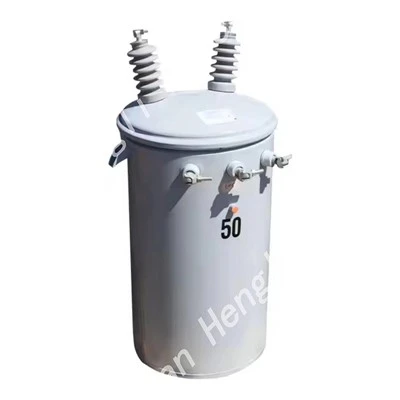
If you’ve ever driven down a residential street at dusk, watched windows glow with the light of a thousand lamps, or seen a neighborhood coffee brewer hum to life on a Monday morning, you’ve relied on the unassuming work box sitting on a wooden pole at the edge of the sidewalk: the single-phase pole mounted transformer. As a supplier of these transformers, I get this question constantly—especially from homeowners, small business owners, and even electricians who are sizing up a new installation or replacing an old, finicky unit. Today, I’m breaking down what the typical capacity of these workhorses actually is, cutting through the jargon, and sharing what you need to know to get the right unit for your needs. Single Phase Pole Mounted Transformer
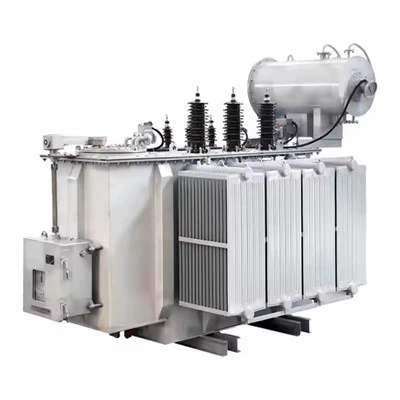
First, let’s start with the basics so we’re all on the same page. A single-phase pole mounted transformer is the workhorse that takes the high-voltage electricity coming off the local power grid (often anywhere from 7,200 volts to 34,500 volts, depending on your area) and steps it down to the 120/240 volts that powers your home, your local bakery, or the corner grocery. Unlike three-phase transformers that serve large commercial complexes or industrial parks, these single-phase units are built for smaller, distributed loads—think individual residences, small retail spaces, or clusters of a few homes. That’s why their capacity is tailored to meet the steady, modest energy needs of daily residential and light commercial use.
Now, the question of “typical capacity” doesn’t have a one-size-fits-all answer, but there are ranges that have been standard for decades in the North American market, which is the primary region we supply, and most other global utility markets with similar grid setups. Let’s break down the tiers, starting from the smallest up to the most common, and what each is used for.
The smallest capacity you’ll encounter in pole mounted single-phase units is often around 10 kVA (kilovolt-amperes, the standard unit for transformer capacity, similar to but not exactly the same as kilowatts, but close enough for most practical purposes). These tiny transformers are almost never used for full homes. Instead, they’re reserved for very niche, low-load applications: a single remote irrigation pump, a small sign for a storefront, or a standalone light for a rural road that doesn’t have access to a larger grid tap. They’re rare for most residential work, but they’re a key part of our product line for specialized utility projects.
Next up, the 15 kVA and 25 kVA units. These are still pretty small, but they start to edge into residential use for very compact homes—like a tiny house, a small accessory dwelling unit (ADU), or a home that uses very minimal electricity, maybe in a area where utility rates are low and residents use space heaters sparingly, or older homes with all electric but limited outlets. I’ve seen these used for small ADUs that only have a mini-fridge, a few lights, and a microwave, no electric oven or dryer. They’re reliable, cost-effective, and perfect for those ultra-low-load applications, though they’re not common for full-size single-family homes.
The sweet spot for most single-family residential applications is the 30 kVA to 50 kVA range. This is the bread and butter of our business, and the most common capacity you’ll find in neighborhoods across the U.S. and Canada. Let me explain why: a typical single-family home uses between 10 kVA and 20 kVA of electricity at peak use, right? When you’re running your oven, your AC, your dryer, and your water heater all at the same time, that’s the peak load. So a 30 kVA transformer gives you a buffer—enough extra capacity to handle unexpected spikes, like if you invite a dozen people over and everyone’s charging their phone, running a space heater, and using the microwave, without overloading the unit. Some older homes that were wired for less electricity might use a 25 kVA, but most new homes built in the last 20 years, which have larger AC units, electric stoves, and maybe even electric vehicle (EV) chargers, lean toward the 45 or 50 kVA range. I’ll be honest, when we sell a unit to a homeowner, I always recommend sizing up a bit rather than cutting corners here. You don’t want to be the person who has to replace their transformer three years after moving in because they added an EV charger and their 30 kVA can’t handle the extra load.
Now, if you’re a small business owner, a contractor working on a small commercial space, or a developer building a small cluster of homes, you’re going to be looking at the next tier: 75 kVA up to 167 kVA. These units are still single-phase, so they’re not for big industrial use, but they’re built for more demanding loads. For example, a small grocery store with a refrigeration case, a coffee machine, and a handful of lights will need around 75 kVA. A small apartment building with 4 to 6 units might use a 100 or 125 kVA transformer, since you have multiple homes sharing one unit. I recently worked with a developer building a 8-unit townhome complex, and we supplied them with three 50 kVA units—one per pair of townhomes— which was perfect because it split the load evenly, so if one unit has a big AC running, the others don’t suffer.
What about anything larger than 167 kVA? You won’t find many single-phase pole mounted transformers that go that high, for good reason. At that point, the load is too big for a single-phase setup, utilities almost always switch to three-phase transformers for larger commercial or multi-unit residential projects, because three-phase is more efficient for high loads. So the upper limit for single-phase pole mounted units is generally around 167 kVA, and even that is only for very specific, low-three-phase-demand commercial spaces.
Now, I should clarify a common misconception I hear all the time: people mix up kVA and kW, and it’s easy to see why. For most residential applications, the power factor is high—meaning almost all the electricity coming from the transformer is being used for actual work, not wasted as heat—so 1 kVA is roughly equal to 0.9 kW, which is close to 1 kW for most practical purposes. So a 50 kVA transformer can handle around 45 kW of peak load, which is more than enough for a full-size home. If you have a home with an electric vehicle charger, which uses about 7 kW to 11 kW for Level 2 charging, adding that to the peak load still won’t exceed the capacity of a 50 kVA unit, as long as you size correctly.
Another thing that affects capacity, and something every customer should consider, is the environment and local regulations. If you’re in a hot, dry area like Arizona or Texas, transformers run hotter, so you need a unit that’s rated for higher ambient temperatures, which might mean sizing up a bit even if your home’s electrical load is on the lower end. In areas with frequent storms or high humidity, you might need a more rugged unit, which sometimes comes in slightly different capacity ratings, though the typical kVA ranges stay consistent. And utilities often have their own standards—most require transformers to have a certain capacity to match the grid’s load limits, so when we sell a unit, we always check with the local utility first to make sure we’re meeting their requirements, which is part of the service we provide.
As a supplier, I’ve seen what happens when people get the wrong size transformer. I had a customer a few years back who installed a 25 kVA unit for his new home, and he had an electrician run a 50 amp circuit for an EV charger. Within six months, the transformer was overheating, tripping breakers, and he had to pay for a replacement. The 25 kVA was fine for a home without an EV, but when he added that charger, he needed at least a 45 kVA. That’s the kind of mistake we work hard to help customers avoid. We don’t just sell a box and send it on its way—we ask questions: how big is your home? Do you have electric heating or cooling? Are you planning to add an EV charger, a hot tub, or any other high-load appliances? What’s the local utility’s required capacity? That’s how we make sure you get the right unit the first time.
Now, let’s talk about what makes these capacity ranges standard, and why they haven’t shifted much in the last decade. The technology of single-phase pole mounted transformers hasn’t changed drastically in terms of core capacity design—they’re still built to the same industry standards set by organizations like the Institute of Electrical and Electronics Engineers (IEEE) and the National Electrical Manufacturers Association (NEMA). Those standards test transformers to make sure they can handle their rated capacity for years, without overheating or failing, which is why you can trust that a unit rated 50 kVA will actually perform at that level under normal use.
That said, there is a small trend I’ve noticed lately: as more homes add EV chargers and solar panels, some customers are opting for a slightly larger transformer than they might have 10 years ago. A home with solar can feed electricity back into the grid, which means the transformer has to handle both incoming and outgoing load, so sizing up a bit helps with that. For example, a home with solar and an EV charger might go with a 60 kVA unit instead of a 50 kVA, just to have extra headroom. That’s a smart call, because it means you won’t have to upgrade your transformer down the line when your solar system expands or you add a second EV.
So to recap, the typical capacity of a single phase pole mounted transformer, based on standard global utility use and our decades of experience supplying these units, is as follows: 10 kVA to 25 kVA for low-load specialized applications, 30 kVA to 50 kVA for single-family residential homes, 75 kVA to 167 kVA for small commercial and multi-unit residential projects, and anything over 167 kVA is almost always served by three-phase transformers.
At the end of the day, getting the right capacity is critical for safety, reliability, and cost. A transformer that’s too small will overheat, fail prematurely, and could pose a fire hazard. A transformer that’s too big is a waste of money—you’ll pay more upfront for a unit you don’t need, and it won’t operate as efficiently as a properly sized one.
If you’re planning a new installation, replacing an old transformer, or just have questions about what capacity is right for your project, we’re here to help. We don’t just sell transformers—we have a team of experts who can walk you through every step, from sizing to delivery, to make sure you get exactly what you need, on time and on budget. Don’t guess when it comes to something that powers your home or business. Reach out today to start a conversation about your single phase pole mounted transformer needs.
Single Phase Pole Mounted Transformer References
- Institute of Electrical and Electronics Engineers (IEEE). (2020). Standard Requirements for Liquid-Immersed Distribution, Power, and Regulating Transformers. IEEE C57.12.00-2020.
- National Electrical Manufacturers Association (NEMA). (2019). Distribution Transformers for Pad-Mount, Pole-Mount, and Subsurface Applications. NEMA TR 1-2019.
- U.S. Department of Energy. (2021). “Residential Electrical Distribution Infrastructure: Capacity and Performance Standards.” Office of Energy Efficiency and Renewable Energy.
- Canadian Standards Association (CSA Group). (2022). Distribution Transformers – Performance Requirements. CSA C88-22.
Zhejiang Jiangshan Hengli Electrical Co., Ltd.
Zhejiang Jiangshan Hengli Electrical Co., Ltd. is one of the most professional single phase pole mounted transformer manufacturers and suppliers in China, featured by quality products and low price. Please rest assured to wholesale cheap single phase pole mounted transformer in stock here and get pricelist from our factory. Customized orders are welcome.
Address: 212 Fuzhu Street Sidu Town, Jiangshan, Zhejiang, China
E-mail: henglijs@foxmail.com
WebSite: https://www.henlypower.com/
