Alright, let’s cut to the chase. If you’re here, you’re probably poking around for filtration solutions and wondering if good old standard expanded metal is even in the mix. Let me start with my side of the story: I’ve been supplying standard expanded metal for over a decade, and one of the most common questions I get isn’t about load support or security— it’s about filtration. Most folks start skeptical, thinking expanded metal is just those lacy, diamond-patterned sheets for fencing or shelving. But here’s the thing: filtration isn’t just for woven wire mesh or fancy sintered metal. Standard expanded metal has been quietly holding its own in tons of filtration apps, and I’m gonna break down why, how, and when it works (and when it doesn’t, so you don’t waste your time). Standard Expanded Metal
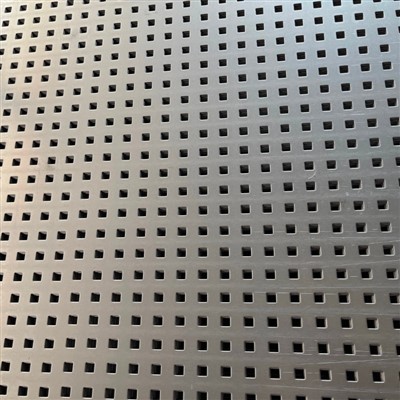
First, let’s get on the same page about what standard expanded metal actually is, because a lot of people mix it up with perforated metal or expanded metal’s cousin, ribbed expanded. Standard expanded metal is made by taking a solid metal sheet, stamping a bunch of slits into it, then stretching the sheet open to form those consistent diamond-shaped openings— no cutting separate pieces and welding, no excess material wasted. It’s lightweight, rigid, and has that open, porous structure built right in. Now, for filtration, porosity is the name of the game, right? Standard expanded metal’s porosity ranges from like 20% up to 60%, depending on the gauge thickness and diamond size. Compare that to, say, solid metal, which is 0% porosity, and woven wire mesh which is usually 40-80%— that’s not a huge gap, and when you factor in cost and durability, it starts looking way more appealing than people assume.
Wait, but hold on— filtration isn’t just about how much open space you have. What about the size of the openings? That’s the big one, because if your diamonds are too big, everything slips right through. Standard expanded metal comes in all sorts of opening sizes, from tiny 1/8 inch diamonds to 2 inch+ ones. So if you need to filter out large particulates— like debris from wastewater, scale from hydraulic fluids, or even food chunks during processing— standard expanded metal nails that. I’ve sent tons of sheets to food processing plants using 3/8 inch diamonds to filter fruit pulp before it goes through juicers. It’s way sturdier than woven wire mesh, which can tear if there’s a sudden surge of material, so it lasts way longer in high-volume applications. That’s a win in my book— less downtime, less replacement cost.
But here’s where I see most people get confused: can it filter fine stuff? Like, micron-sized contaminants in pharmaceutical or lab filtration? Honestly, standard expanded metal’s not the first pick for that. Because even the smallest standard expanded openings are like 0.06 inches, which is 60,000 microns. That’s way bigger than, say, a 10-micron woven mesh. But wait— don’t write it off entirely for fine filtration. A lot of filtration systems use multiple stages, right? Pre-filtration is the first line of defense, catching the big junk so the fine filters don’t clog up and burn out way too fast. That’s exactly where standard expanded metal shines as a pre-filter. I had a guy last year in the oil and gas space, he was using our 1/4 inch standard expanded metal as a pre-filter for drilling mud. The big rock and sand would get caught in the expanded sheet, and the secondary fine filters only had to handle the tiny particulates. He told me his filter change frequency went from once a week to once every three months. That’s a massive win for his operation.
Now, let’s talk about the properties that make standard expanded metal good for filtration, beyond just opening size and porosity. First, it’s rigid— way more rigid than woven wire mesh of the same thickness. That means it holds its shape even under pressure, right? If you’re pushing fluid through a filter at high PSI, woven mesh can sag, let big particulates slip through, and even wrinkle, which ruins the filtration consistency. Standard expanded metal doesn’t do that. I’ve got a client in the chemical manufacturing space that uses our 12-gauge standard expanded metal for filtering corrosive acid runoff. The rigidity means it doesn’t flex when the pump kicks on, and since expanded metal uses the entire metal sheet (no scrap from cutting and welding), it’s also stronger than equivalent perforated metal. Perforated metal has those neat round holes, but they’re only as strong as the remaining metal between them. Expanded metal’s structure is uniform across the whole sheet, so it can handle way more pressure without deforming.
Another big plus is its surface area and flow dynamics. Wait, how does a diamond-shaped sheet compare to flat mesh? Let’s think: when fluid flows through standard expanded metal, it doesn’t just go straight through a hole— it has to navigate around those diamond struts, which creates a bit of turbulence. That turbulence is actually a good thing for filtration, because it keeps particulates from just sliding along the filter surface and getting carried through. Woven wire mesh can have more laminar flow, which lets smaller particles sneak through if they’re not perfectly aligned with the mesh holes. Now, that’s not to say standard expanded metal is better for every app— if you need super smooth flow for sensitive stuff like cell culture media, that turbulence might be a problem. But for most industrial filtration, that turbulence is a benefit.
But let’s be real here— I’m not gonna sell you a product that doesn’t have flaws. Standard expanded metal has limits. The opening size isn’t as precise as woven mesh, for one thing. If you need a consistent 10-micron opening, you’re not getting that with standard expanded metal. It’s also not ideal for apps where you need to handle very fine, sticky particulates that can clog up the gaps between the diamond struts. If you’re filtering chocolate for baking, that thick, sticky cocoa butter can get trapped in the expanded metal’s openings, and it’s a pain to clean— way harder than a smooth woven mesh screen. Also, if your filtration needs require micron-level accuracy, like in semiconductor manufacturing, standard expanded metal is too coarse. We make expanded metal that can get pretty fine, but not fine enough for those ultra-sensitive apps.
Wait, and let’s not forget material options. Standard expanded metal comes in tons of metals, right? Stainless steel is the most common, but we also do aluminum, brass, copper, even specialty alloys like Hastelloy for super corrosive environments. That flexibility is huge for filtration— if you’re filtering food, you need food-grade 304 or 316 stainless steel, which is standard for expanded metal. If you’re filtering saltwater or harsh chemical runoff, you can get a corrosion-resistant alloy. That’s way more versatile than people give it credit for. I had a seafood processing client a while back using our 316 stainless standard expanded metal to filter fish oil. It’s salt-resistant, non-reactive with the oil, and the diamond size catches the small fish bones and scales that would mess up their final product. Perfect fit.
Now, let’s talk about a few real-world use cases that prove this works, not just theoretical stuff. First, as I mentioned earlier, industrial pre-filtration. Almost every system that handles bulk fluids has a pre-filter, and standard expanded metal is the go-to for that because it’s cheap, durable, and easy to replace. Oil and gas, wastewater treatment, mining— all use it to catch large debris so the fine final filters last. Then there’s air filtration? Wait, yeah— HVAC systems often use expanded metal as a support for air filters, but some high-traffic industrial HVAC apps use it as a primary air pre-filter to catch dust and lint. Also, grain processing farms use expanded metal to filter grain, separating chaff and stalks from the actual grain kernels. The diamond size is set to let the small kernels through and catch the big chaff, and it holds up way better than a cloth mesh that would tear after a few harvests.
Another big one: liquid-solid separation. For example, breweries using expanded metal in their mash tuns to separate spent grain from the wort. The standard expanded metal holds the grain bed in place, lets the liquid wort flow through, and is way easier to clean than other filter media. My buddy who runs a small craft brewery swears by our 1/2 inch diamond stainless steel expanded metal for that exact job— he says it’s lasted him three years so far without needing replacement, and it’s way cheaper than custom mesh screens he tried first.
Now, let’s address the biggest myth I hear all the time: “Expanded metal is too porous to be a real filter.” No, dude— filtration isn’t just about catching every last particle, it’s about matching the filter to your specific needs. If you need to catch 2-inch rocks, standard expanded metal with 2-inch diamonds works perfectly. If you need to catch 100-micron particles, it works as a pre-filter. It’s not a replacement for sintered metal or fine woven mesh for all filtration, but it fills a huge niche that no one talks about enough.
So, when should you pick standard expanded metal for filtration? Let’s sum it up: you need to filter large particulates, need a rigid, durable filter that can handle high pressure or high volume, want something cheap and easy to source and replace, need corrosion resistance for industrial or food-grade apps. When should you skip it? You need micron-level precision filtering very fine particles, handling sticky, fine particulates that clog easily, or need ultra-smooth laminar flow for sensitive materials like lab samples or cell culture.
As a supplier, I’ll be honest— I don’t push standard expanded metal for every filtration job. But I do push it as an option that most people haven’t considered, because it solves problems other filters can’t. Woven mesh tears, perforated metal is flimsy, sintered metal is expensive. Standard expanded metal hits that sweet spot of cost, durability, and performance for tons of filtration apps.
If you’re currently dealing with filters that wear out too fast, clog too often, or cost a fortune to replace, hit us up to talk through your needs. We can send sample sheets, run tests for your specific application, and make sure you’re getting the right filter for your job— no sales pitch, just straight talk from someone who’s been in this game for years. Don’t waste another dollar on filter media that doesn’t work for your process.
Small Hole Expanded Metal References:
- Expanded Metal Manufacturers Association. (2022). Standard Expanded Metal Specifications and Industrial Applications.
- Filter Media Industry Association. (2021). Comparative Performance of Metal Filter Media for Industrial Filtration.
- Food and Drug Administration. (2020). Guidance on Food-Grade Metal Components for Processing Equipment.
- Oil and Gas Fluid Handling Journal. (2023). Pre-Filtration Solutions for Drilling Mud Systems.
- ASM International. (2022). Corrosion Resistance of Metal Mesh and Expanded Metal in Harsh Industrial Environments.
Anping Yilida Metal Wire Mesh Co., Ltd.
Anping Yilida Metal Wire Mesh Co., Ltd. is one of the most reliable standard expanded metal manufacturers and suppliers in China, also supports customized service. Please feel free to buy bulk high quality standard expanded metal made in China here from our factory.
Address: Wire Mesh Development Zone, Anping, Hebei Province, China
E-mail: sales@wiremesh-yg.cn
WebSite: https://www.yilidametal.com/
