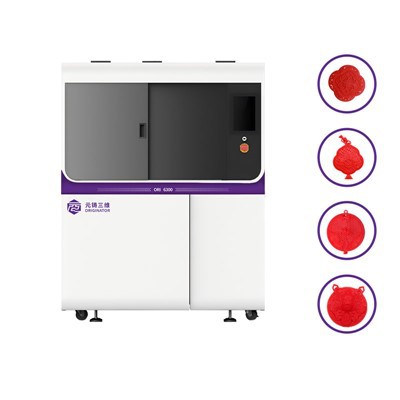
In the ever – evolving landscape of medical technology, 3D printing has emerged as a revolutionary force, offering new possibilities for the creation of medical models. As a supplier of 3D printing wax material, I am frequently asked whether our wax can be used for making medical models. In this blog post, I will delve into the details of this question, exploring the properties of 3D printing wax material, the requirements of medical models, and the potential applications and limitations of using wax for this purpose. 3D Printing Wax Material
Properties of 3D Printing Wax Material
3D printing wax material has several unique properties that make it an attractive option for various applications. First and foremost, wax is a thermoplastic material, which means it can be melted and solidified repeatedly. This property is crucial for 3D printing, as it allows the material to be extruded or deposited layer by layer to create a three – dimensional object.
Wax also has a relatively low melting point, typically ranging from 50°C to 100°C. This low melting point makes it easy to work with during the 3D printing process, as it can be heated and extruded without requiring high – energy consumption. Additionally, the low melting point means that the wax can be removed easily after the printing process, for example, by melting it out in a furnace or using a solvent.
Another important property of wax is its smooth surface finish. When printed, wax can produce models with a high – quality surface, which is often desirable for medical models, especially those used for visual inspection or surgical planning. The smooth surface can also be polished to achieve an even more refined appearance.
Requirements of Medical Models
Medical models serve a variety of purposes, from educational tools to surgical guides. As such, they have specific requirements that must be met to ensure their effectiveness.
Accuracy: One of the most critical requirements for medical models is accuracy. These models are often used to represent the human body, and any inaccuracies can lead to incorrect diagnoses or surgical procedures. Therefore, the material used to make medical models must be able to accurately reproduce the shape and details of the anatomical structure.
Biocompatibility: In some cases, medical models may come into contact with the human body, either during surgical procedures or as part of medical research. As a result, the material used must be biocompatible, meaning it does not cause any adverse reactions in the body.
Durability: Medical models need to be durable enough to withstand handling and repeated use. They should not break or deform easily, especially if they are used for surgical training or as long – term educational tools.
Visibility: For some medical models, such as those used for radiological studies, visibility is an important factor. The material should allow for clear visualization of internal structures, either through X – rays, CT scans, or other imaging techniques.
Potential Applications of 3D Printing Wax Material in Medical Model Making
Despite the challenges, there are several potential applications of 3D printing wax material in medical model making.
Anatomical Models for Education: Wax – printed anatomical models can be used as educational tools in medical schools and training programs. These models can provide a hands – on learning experience for students, allowing them to study the structure and function of different organs and tissues. The smooth surface finish of wax models makes them visually appealing and easy to understand.
Surgical Planning Models: Wax models can also be used for surgical planning. Surgeons can use these models to practice complex procedures before performing them on patients. The ability to accurately reproduce the patient’s anatomy in a wax model can help surgeons identify potential challenges and develop better surgical strategies.
Dental Models: In the field of dentistry, 3D printing wax material can be used to create dental models, such as crowns, bridges, and dentures. Wax is a traditional material in dentistry, and 3D printing technology allows for more precise and efficient production of these models.
Limitations of Using 3D Printing Wax Material for Medical Models
While 3D printing wax material has many advantages, it also has some limitations when it comes to making medical models.
Lack of Biocompatibility: As mentioned earlier, wax is not inherently biocompatible. This means that it cannot be used for medical models that will come into direct contact with the human body, such as implants or surgical instruments.
Low Durability: Wax is a relatively soft material, and it may not be durable enough for some medical applications. For example, models used for repeated surgical training may wear out quickly if made of wax.
Limited Visibility: Wax is not transparent or radiolucent, which can limit its use in medical models that require clear visualization of internal structures. For radiological studies, other materials such as plastic or resin may be more suitable.
Overcoming the Limitations
Although there are limitations to using 3D printing wax material for medical models, there are ways to overcome them.
Coating for Biocompatibility: One approach is to apply a biocompatible coating to the wax model. This coating can act as a barrier between the wax and the human body, making the model suitable for applications where biocompatibility is required.
Reinforcement for Durability: To improve the durability of wax models, they can be reinforced with other materials. For example, a thin layer of plastic or resin can be added to the wax model to make it more resistant to wear and tear.
Combined with Other Materials: Wax can also be used in combination with other materials to create hybrid medical models. For instance, a wax model can be used as a base, and then other materials can be added to enhance its visibility or durability.
Conclusion
In conclusion, 3D printing wax material has the potential to be used for making medical models, especially in applications where accuracy, smooth surface finish, and ease of processing are important. However, it also has some limitations, such as lack of biocompatibility, low durability, and limited visibility. By understanding these properties and limitations, and by finding ways to overcome them, we can explore the full potential of 3D printing wax material in the medical field.
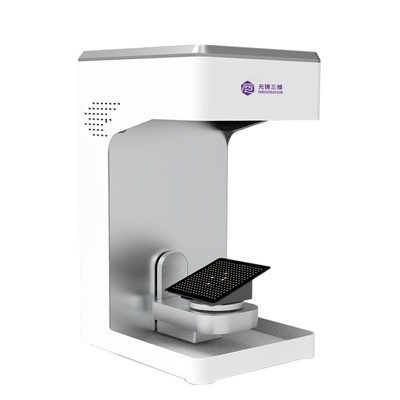
Wax 3D Printer If you are interested in using our 3D printing wax material for medical model making or have any questions about our products, I encourage you to reach out to us for a procurement discussion. We are committed to providing high – quality wax materials and excellent customer service to meet your specific needs.
References
- "3D Printing in Medicine: Current and Future Applications" by Ivan S. Yeong, Chua Chee Kai, and Dong Ming.
- "Medical Modeling and 3D Printing" by John R. Harris and Paul E. Steward.
- "Materials for 3D Printing in Medical Applications" by S. M. El – Sayed and A. A. El – Shafie.
Hangzhou Originator 3D Technology Co., Ltd.
Hangzhou Originator 3D Technology Co., Ltd. is one of the most experienced 3d printing wax material manufacturers and suppliers in China. With abundant experience, we warmly welcome you to wholesale high quality 3d printing wax material made in China here from our factory. Contact us for more details.
Address: Room 403, Building 2, Block B, Heda Incubation Park,No. 452, 6th Avenue, Xiasha, Qiantang District,Hangzhou, Zhejiang, China
E-mail: Sales@originator3d.com
WebSite: https://www.originator3d.com/
