What is the maximum welding thickness of an HF Welding Machine?
As a provider of high – frequency (HF) welding machines, I often receive inquiries from clients about the maximum welding thickness these machines can handle. This is a crucial question as it directly impacts the range of applications and the types of projects that can be accomplished using our equipment. HF Welding Machine
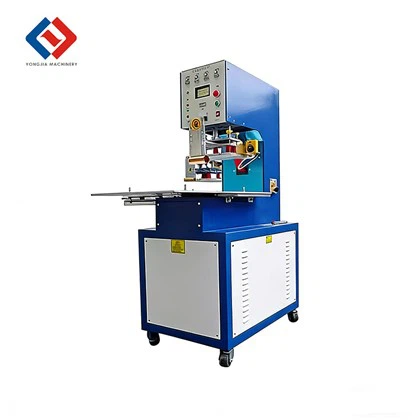
Understanding HF Welding
Before delving into the maximum welding thickness, it’s essential to understand how HF welding works. High – frequency welding, also known as radio – frequency (RF) welding or dielectric welding, is a process that uses high – frequency electromagnetic fields to generate heat within thermoplastic materials. When an alternating electric field is applied to the materials to be joined, the polar molecules in the plastic align and re – align with the changing field, creating friction and thus generating heat. This heat softens the plastic, allowing the two pieces to be fused together under pressure.
The key components of an HF welding machine include a high – frequency generator, electrodes, and a press. The high – frequency generator produces the necessary electromagnetic field, the electrodes direct the field onto the workpieces, and the press applies pressure to ensure a strong bond.
Factors Affecting the Maximum Welding Thickness
Several factors influence the maximum welding thickness that an HF welding machine can achieve.
Material Properties
Different thermoplastic materials have varying dielectric properties, which affect how they respond to the high – frequency field. For example, materials with high dielectric constants, such as polyvinyl chloride (PVC), are more easily heated by the HF field compared to materials with lower dielectric constants. PVC can typically be welded in relatively thick sections, often up to 6 – 8 mm or even more in some cases. On the other hand, materials like polyethylene (PE) have a lower dielectric constant, making it more challenging to weld thick sections. For PE, the maximum welding thickness may be limited to around 2 – 3 mm.
Machine Power
The power of the HF welding machine is a significant determinant of the maximum welding thickness. Higher – power machines can generate stronger electromagnetic fields, which in turn can heat thicker materials. A machine with a power output of 5 – 10 kW can usually handle thinner materials, up to 3 – 5 mm. In contrast, industrial – grade HF welding machines with power outputs of 20 – 30 kW or more can weld materials up to 10 – 15 mm thick. However, it’s important to note that simply increasing the power is not always the solution, as it can also lead to overheating and other quality issues if not properly controlled.
Electrode Design
The design of the electrodes plays a crucial role in the welding process. Well – designed electrodes can ensure that the high – frequency field is evenly distributed across the welding area, which is essential for achieving a uniform weld. For thicker materials, electrodes may need to be larger and more robust to effectively transfer the electromagnetic field. Additionally, the shape of the electrodes can be customized to suit the specific geometry of the workpieces. For example, in the case of welding large, flat sheets, flat electrodes are commonly used, while for welding complex shapes, contoured electrodes may be required.
Welding Time and Pressure
The welding time and the pressure applied during the process also affect the maximum welding thickness. Longer welding times allow more heat to be generated within the material, which can be beneficial for thicker materials. However, excessive welding time can lead to material degradation. Similarly, the pressure applied by the press needs to be carefully controlled. Higher pressure can help to ensure better contact between the two workpieces and promote a stronger bond, but too much pressure can cause the material to deform or squeeze out.
Typical Maximum Welding Thickness Ranges
Based on our experience as an HF welding machine supplier, here are some typical maximum welding thickness ranges for different types of thermoplastic materials:
PVC
PVC is one of the most commonly welded materials using HF welding machines. For standard industrial PVC sheets, the maximum welding thickness can range from 6 – 12 mm. However, with advanced machines and optimized welding parameters, it is possible to weld PVC materials up to 15 mm thick in some cases. This makes PVC suitable for a wide range of applications, such as the production of inflatable products, tarpaulins, and industrial covers.
Polyurethane (PU)
PU is another popular material for HF welding. The maximum welding thickness for PU is typically around 4 – 8 mm. PU is often used in the manufacturing of automotive interiors, sports equipment, and medical devices. The relatively lower maximum thickness compared to PVC is due to its different dielectric properties and melting characteristics.
Thermoplastic Elastomers (TPE)
TPEs are a class of materials that combine the properties of plastics and rubbers. The maximum welding thickness for TPEs usually ranges from 2 – 6 mm. TPEs are used in applications where flexibility and durability are required, such as gaskets, seals, and consumer products.
Achieving the Maximum Welding Thickness
To achieve the maximum welding thickness for a given material, it is necessary to optimize the welding parameters. This involves a careful balance of machine power, welding time, pressure, and electrode design.
Parameter Optimization
Our team of experts can assist clients in determining the optimal welding parameters for their specific materials and applications. We conduct extensive testing in our laboratory to fine – tune the power output, welding time, and pressure settings. For example, when welding a thick PVC sheet, we may start with a relatively high power setting to quickly heat the material, followed by a lower power setting to maintain the heat and ensure a proper bond.
Operator Training
Proper operator training is also crucial for achieving the maximum welding thickness. Operators need to understand the principles of HF welding, how to adjust the machine settings, and how to handle the workpieces. We offer comprehensive training programs to our clients, which include both theoretical and practical sessions. During the training, operators learn how to recognize and troubleshoot common welding problems, such as uneven heating and poor bonding.
Applications and Benefits of Welding Thicker Materials
Welding thicker materials using HF welding machines opens up a wide range of applications.
Industrial Applications
In the industrial sector, welding thick thermoplastic materials is essential for the production of large – scale products such as storage tanks, industrial pipes, and heavy – duty conveyor belts. HF welding provides a strong and reliable bond, ensuring the integrity of these products. The ability to weld thicker materials also allows for the use of more robust and durable thermoplastics, which can withstand harsh operating conditions.
Consumer Products
In the consumer products industry, welding thicker materials can be used to create high – quality and long – lasting products. For example, in the production of outdoor furniture, welding thick PVC or TPE components can result in more sturdy and stable products. In the automotive industry, welding thick PU parts can improve the comfort and safety of vehicles.
Conclusion
The maximum welding thickness of an HF welding machine depends on a variety of factors, including material properties, machine power, electrode design, and welding parameters. As an HF welding machine supplier, we are committed to providing our clients with the most advanced and reliable equipment, as well as the technical support needed to achieve the best welding results.
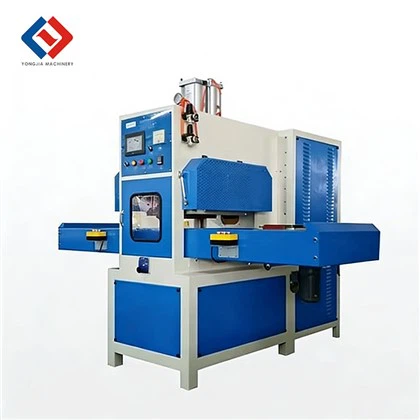
If you are interested in our HF welding machines and would like to discuss your specific requirements, whether it’s about the maximum welding thickness for your materials or other aspects of the welding process, we encourage you to contact us for a detailed consultation. Our team of experts is ready to assist you in finding the perfect solution for your welding needs.
Shuttle Table HF Welding Machine References
- "High – Frequency Welding: Principles and Applications" by John Smith
- "Thermoplastic Welding Technologies" by Mary Johnson
- Industry reports on HF welding machine performance and capabilities
Dongguan Yongjia Machinery Equipment Co., Ltd.
We are one of the most reliable hf welding machine manufacturers and suppliers in China, specialized in providing high quality customized service. Please feel free to wholesale advanced hf welding machine at low price from our factory. For quotation, contact us now.
Address: No. 240, Chashan South Road, Chashan Town, Dongguan City, Guangdong Province, China
E-mail: info@yjwelding.com
WebSite: https://www.yjhighfrequencymachine.com/
