Hey there! As a supplier of Transformer Testers, I often get asked about the frequency stability of these nifty little devices. So, I thought I’d take a few minutes to break it down for you in a way that’s easy to understand. Transformer Tester
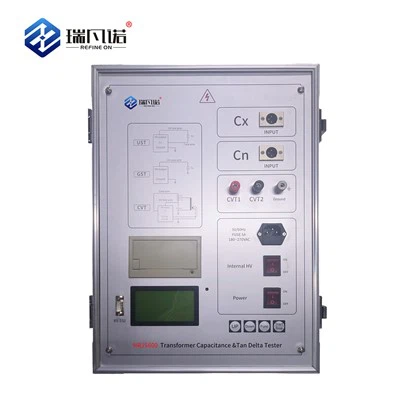
What’s Frequency Stability Anyway?
First off, let’s talk about what frequency stability means. In the world of Transformer Testers, frequency stability refers to the ability of the tester to maintain a consistent frequency output over a given period. This is super important because transformers are designed to work at specific frequencies. If the frequency of the tester isn’t stable, it can lead to inaccurate test results.
Think of it like tuning a guitar. If the strings aren’t tuned to the right frequency, the music will sound off. Similarly, if the frequency of the Transformer Tester isn’t stable, the test results won’t accurately reflect the performance of the transformer.
Why Frequency Stability Matters
Accurate Testing
The most obvious reason why frequency stability matters is for accurate testing. Transformers are used in a wide range of applications, from power distribution to electronic devices. To ensure that they work properly, they need to be tested at the right frequency. A Transformer Tester with good frequency stability can provide reliable and consistent test results, which helps in identifying any potential issues with the transformer.
Compliance with Standards
There are various industry standards that specify the frequency requirements for transformer testing. For example, in many countries, the standard frequency for power systems is 50 Hz or 60 Hz. A Transformer Tester needs to be able to operate at these frequencies with high stability to meet the compliance requirements. If the tester can’t maintain the correct frequency, the test results may not be accepted, which can cause delays and additional costs.
Protecting the Transformer
Inaccurate testing due to poor frequency stability can also lead to problems with the transformer itself. If a transformer is tested at the wrong frequency, it may be misdiagnosed as faulty when it’s actually fine, or vice versa. This can result in unnecessary repairs or replacements, which can be expensive. Additionally, if a transformer is operated under incorrect frequency conditions, it can cause overheating, reduced efficiency, and even premature failure.
How We Ensure Frequency Stability in Our Transformer Testers
At our company, we take frequency stability very seriously. We use state – of the – art technology and high – quality components to ensure that our Transformer Testers offer excellent frequency stability.
Precision Oscillators
One of the key components in our testers is the precision oscillator. This is like the heart of the tester, generating the frequency signal. We use very accurate oscillators that are designed to maintain a stable frequency output even under varying environmental conditions, such as temperature and humidity changes.
Advanced Control Systems
We also have advanced control systems in place. These systems continuously monitor the frequency output of the tester and make adjustments as needed. If there’s even a slight deviation from the desired frequency, the control system will automatically correct it to ensure that the frequency remains stable throughout the testing process.
Rigorous Testing and Calibration
Before our Transformer Testers leave the factory, they go through rigorous testing and calibration procedures. We test them under different conditions to make sure that they meet our high standards of frequency stability. We also regularly calibrate our testers to ensure that they continue to perform accurately over time.
Real – World Applications
Let’s look at some real – world applications where frequency stability of a Transformer Tester is crucial.
Power Grid Transformers
Transformers in the power grid are responsible for stepping up or stepping down the voltage to ensure efficient power transmission. These transformers need to be tested regularly to make sure they’re operating safely and efficiently. A Transformer Tester with good frequency stability is essential for accurate testing in this context. Any inaccuracies in the test results could have serious consequences for the power grid, such as power outages or equipment damage.
Industrial Transformers
In industrial settings, transformers are used to power various machines and equipment. These transformers need to be in good working condition to ensure smooth operation of the industrial processes. By using a Transformer Tester with stable frequency output, industrial companies can accurately assess the health of their transformers and take preventive maintenance measures when necessary.
Electrical Vehicle Charging Stations
With the increasing popularity of electric vehicles, the demand for reliable transformer testing in electric vehicle charging stations is also growing. Chargers rely on transformers to convert the electrical power to the appropriate voltage for charging the vehicles. A Transformer Tester with high frequency stability is needed to ensure the proper functioning of these transformers and to guarantee the safety and efficiency of the charging process.
Comparing Frequency Stability with Competitor Products
We’ve done our fair share of comparisons between our Transformer Testers and those of our competitors. And let me tell you, we’re pretty confident in the frequency stability of our products.
Some competitor testers may claim to have good frequency stability, but when you look at the real – world performance, they often fall short. Their oscillators may not be as accurate, or their control systems may not be as effective at maintaining the frequency. This can lead to inconsistent test results, which is a big no – no when it comes to transformer testing.
On the other hand, our testers are designed and built with frequency stability in mind. We’ve invested a lot of time and resources in research and development to ensure that our products offer the best possible performance. So, if you’re looking for a Transformer Tester that you can rely on for accurate and consistent frequency output, you’re in the right place.
Conclusion
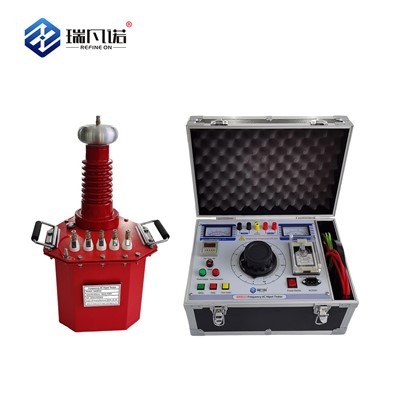
Frequency stability is a crucial aspect of Transformer Testers. It ensures accurate testing, compliance with standards, and protects the transformers. At our company, we’ve gone the extra mile to ensure that our Transformer Testers offer excellent frequency stability through the use of precision oscillators, advanced control systems, and rigorous testing and calibration.
Partial Discharge Tester If you’re in the market for a Transformer Tester and want to ensure that you’re getting a product with top – notch frequency stability, we’d love to hear from you. Whether you’re involved in power grid operations, industrial manufacturing, or electric vehicle charging, our testers can meet your needs. Contact us today to start a conversation about your specific requirements and how our Transformer Testers can help you get the most accurate test results possible.
References
- Electrical Power Systems: Principles and Applications by Ali A. Chowdhury
- Transformer Testing Handbook by James H. Harlow
Refine On (Hebei) Electric Power Technology Co., Ltd.
Refine On (Hebei) Electric Power Technology Co., Ltd. is one of the most reliable transformer tester manufacturers and suppliers in China, also supports customized service. Please feel free to wholesale advanced transformer tester at competitive price from our factory. Contact us for quotation.
Address: Building 13, Liandong U Valley, No.64, Jing SAN South Street, Economic Development Zone, Mancheng District, Baoding City, China
E-mail: victor@transformer-test.com
WebSite: https://www.transformer-test.com/
