As a supplier of PVG conveyor belts, I often receive inquiries from customers about the suitability of our products in various environments. One common question is whether PVG conveyor belts can be used in areas with strong sunlight. In this blog post, I will delve into this topic, exploring the technical aspects, potential challenges, and solutions related to using PVG conveyor belts in sun – exposed areas. PVG Conveyor Belt

Understanding PVG Conveyor Belts
PVG (Polyvinyl Chloride and Synthetic Rubber) conveyor belts are widely used in industries such as mining, cement, and food processing. They are known for their excellent abrasion resistance, high – strength carcass, and good flexibility. The PVG cover is a combination of polyvinyl chloride and synthetic rubber, which provides a good balance of properties. It has good chemical resistance, can withstand a certain range of temperatures, and offers reliable performance in normal operating conditions.
The Impact of Strong Sunlight on PVG Conveyor Belts
Strong sunlight mainly consists of ultraviolet (UV) rays, visible light, and infrared radiation. Each of these components can have different effects on PVG conveyor belts:
Ultraviolet (UV) Rays
UV rays are the most harmful part of sunlight to PVG conveyor belts. When PVG conveyor belts are exposed to UV rays for a long time, the chemical structure of the PVG cover can be damaged. The UV rays can break the chemical bonds in the polyvinyl chloride and synthetic rubber, leading to a phenomenon called photo – oxidation. This results in the hardening and cracking of the belt surface over time. As the surface cracks, it becomes more vulnerable to abrasion and other forms of damage, which can significantly reduce the service life of the conveyor belt.
Visible Light and Infrared Radiation
Visible light and infrared radiation can also cause problems. Infrared radiation is a form of heat energy. When the conveyor belt absorbs infrared radiation from the sun, its temperature can rise. High temperatures can affect the physical properties of the PVG material. For example, it can cause the belt to expand, which may lead to misalignment on the conveyor system. Additionally, continuous exposure to high temperatures can accelerate the aging process of the PVG material, similar to the effects of UV rays.
Technical Solutions to Mitigate Sunlight Damage
Fortunately, there are several technical solutions that can help PVG conveyor belts withstand strong sunlight:
UV – Resistant Additives
One of the most effective ways is to add UV – resistant additives to the PVG compound during the manufacturing process. These additives can absorb or reflect UV rays, preventing them from reaching the internal structure of the belt. For instance, carbon black is a commonly used additive. It not only provides UV protection but also enhances the abrasion resistance of the belt. Other additives, such as UV stabilizers, can also be incorporated to further improve the UV resistance of the PVG cover.
Protective Coatings
Applying a protective coating on the surface of the PVG conveyor belt can also be an effective measure. These coatings act as a barrier between the belt and the sunlight. They can reflect a significant portion of the UV rays and reduce the heat absorption of the belt. Some protective coatings are also designed to be self – healing, which can repair minor scratches and cracks on the belt surface, prolonging its service life.
Conveyor Belt Design and Installation
Proper conveyor belt design and installation can also play a role in reducing the impact of sunlight. For example, installing a canopy or shelter over the conveyor system can block a large amount of sunlight. This simple measure can significantly reduce the exposure of the conveyor belt to UV rays and high temperatures. Additionally, ensuring proper tension and alignment of the conveyor belt can prevent additional stress on the belt caused by thermal expansion.
Case Studies
To illustrate the effectiveness of these solutions, let’s look at some real – world case studies. In a mining operation in a desert area, where sunlight is extremely strong, a company installed PVG conveyor belts with UV – resistant additives. After several years of operation, the belts showed only minor signs of wear and tear, and there were no significant cracks on the surface. The company also installed a simple canopy over the conveyor system, which further protected the belts from direct sunlight.
In another case, a food processing plant in a sunny region used PVG conveyor belts with a protective coating. The coating not only protected the belts from UV damage but also made them easier to clean, which was important for maintaining food safety standards. The belts in this plant had a much longer service life compared to those without the protective coating.
Performance Testing
Before supplying PVG conveyor belts for areas with strong sunlight, we conduct a series of performance tests. These tests include UV exposure tests, where the belts are exposed to artificial UV light for a certain period to simulate long – term sunlight exposure. We also measure the physical properties of the belts, such as hardness, tensile strength, and elongation, before and after the tests to evaluate the impact of UV rays.
In addition, we perform temperature tests to assess the heat resistance of the belts. By subjecting the belts to high temperatures similar to those in sun – exposed areas, we can determine whether the belts can maintain their performance under such conditions. These tests ensure that our PVG conveyor belts meet the requirements of customers in areas with strong sunlight.
Conclusion
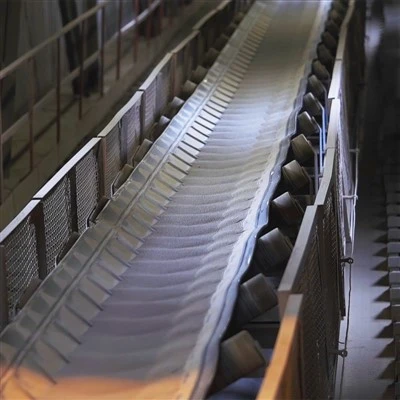
In conclusion, PVG conveyor belts can be used in areas with strong sunlight, but appropriate measures need to be taken to ensure their long – term performance. By using UV – resistant additives, protective coatings, and proper conveyor belt design and installation, we can effectively mitigate the damage caused by sunlight. Our company, as a professional PVG conveyor belt supplier, is committed to providing high – quality products that can withstand various environmental conditions, including strong sunlight.
Self Cleaning Conveyor Belt If you are in need of PVG conveyor belts for areas with strong sunlight or have any other questions about our products, please feel free to contact us for a detailed discussion and procurement negotiation. We look forward to working with you to meet your specific needs.
References
- ASTM International. "Standard Test Methods for Rubber Deterioration – Exposure to Artificial Light." ASTM D518 – 08.
- ISO 14662 – 1:2007. "Textile conveyor belts – Antistatic properties – Specification and test methods."
- The Rubber Manufacturers Association. "Technical Data on Conveyor Belts."
Alumina Technology (Qingdao) New Materials Co., Ltd.
As one of the most professional pvg conveyor belt manufacturers and suppliers in China, we also support customized service. With abundant experience, we warmly welcome you to buy pvg conveyor belt for sale here and get quotation from our factory. For price consultation, contact us.
Address: No.448, Jiangshan South Road, Huangdao District, Qingdao City, Shandong Province
E-mail: Gloria.zhang@contitech.cn
WebSite: https://www.altechconveyorbelt.com/
